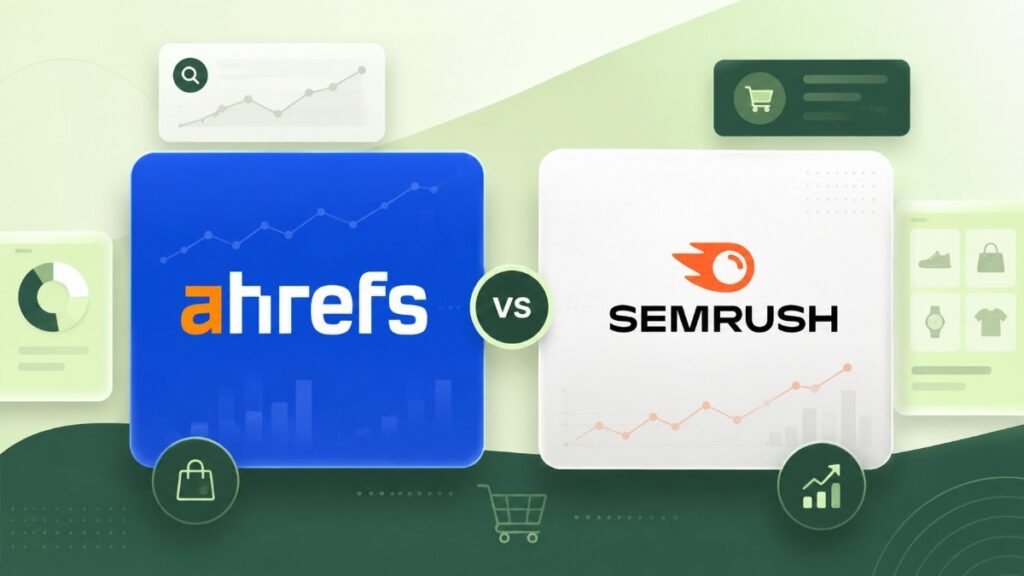

Ahrefs and Semrush are both strong ecommerce SEO platforms, but they solve different problems better. Ahrefs is usually stronger for backlink research, competitor discovery, organic opportunity analysis, and fast SEO investigation. Semrush is often stronger for structured keyword planning, daily rank tracking, integrated reporting, and broader campaign workflows.
For ecommerce stores, the better choice depends on what is limiting growth. A store with weak authority may get more value from Ahrefs. A store managing thousands of keywords, categories, and campaigns may prefer Semrush.
The key is not choosing the tool with the longest feature list. Choose the platform that helps your team make better decisions about category pages, product visibility, technical issues, content gaps, links, and search demand.
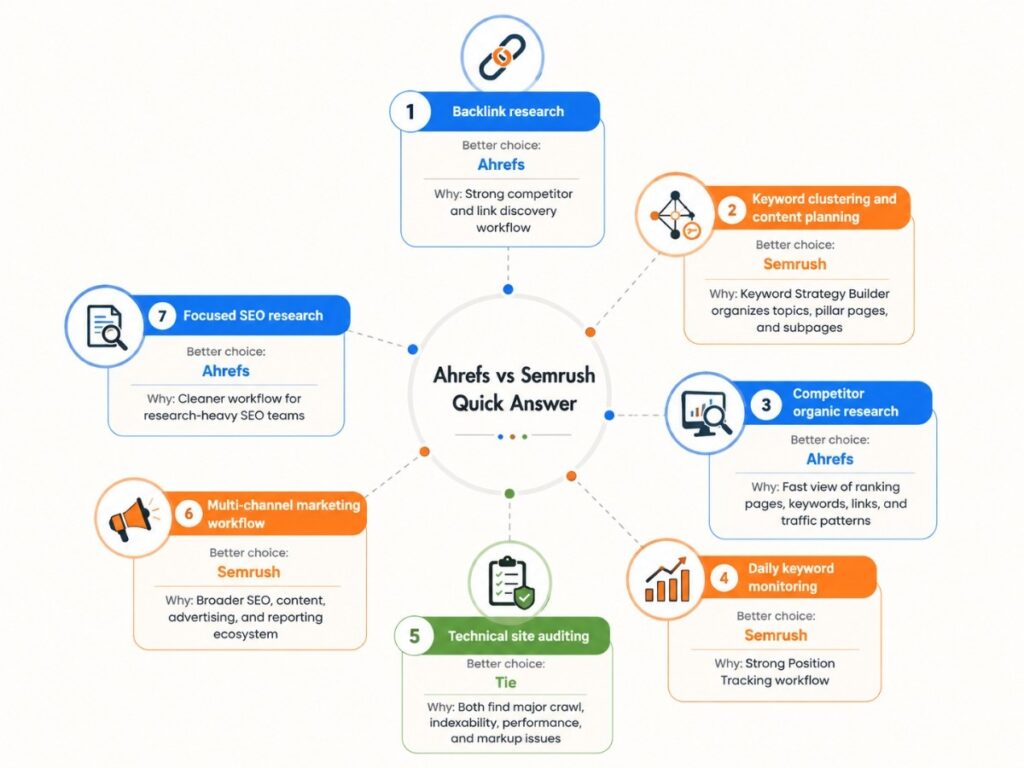
Ahrefs vs Semrush for Ecommerce SEO: Quick Answer
| Ecommerce SEO need | Better choice | Why |
|---|---|---|
| Backlink research | Ahrefs | Strong competitor and link discovery workflow |
| Keyword clustering and content planning | Semrush | Keyword Strategy Builder organizes topics, pillar pages, and subpages |
| Competitor organic research | Ahrefs | Fast view of ranking pages, keywords, links, and traffic patterns |
| Daily keyword monitoring | Semrush | Strong Position Tracking workflow |
| Technical site auditing | Tie | Both find major crawl, indexability, performance, and markup issues |
| Multi-channel marketing workflow | Semrush | Broader SEO, content, advertising, and reporting ecosystem |
| Focused SEO research | Ahrefs | Cleaner workflow for research-heavy SEO teams |
If you are comparing more platforms, this guide to the best ecommerce SEO tools can help you place Ahrefs and Semrush inside a wider technical SEO stack.
What Ecommerce Teams Actually Need From an SEO Tool
Ecommerce SEO has more moving parts than a typical content site. You are not only researching blog topics. You are managing categories, subcategories, products, filters, internal links, duplicate URLs, structured data, out-of-stock pages, and large crawl paths.
A useful platform should help answer five questions:
- Which commercial pages can gain more organic visibility?
- What topics and modifiers are customers searching for?
- Which competitors are winning categories, links, and SERP space?
- Which technical issues block crawling, indexing, or ranking?
- Where should the team invest first for the highest business impact?
This is why a tool comparison should go beyond keyword database size. Ecommerce teams need decision support across discovery, prioritization, implementation, and monitoring.
Ahrefs vs Semrush for Ecommerce Keyword Research
Both tools can uncover ecommerce keyword opportunities. The difference is how they help you turn keyword data into a page strategy.
Where Ahrefs Is Stronger
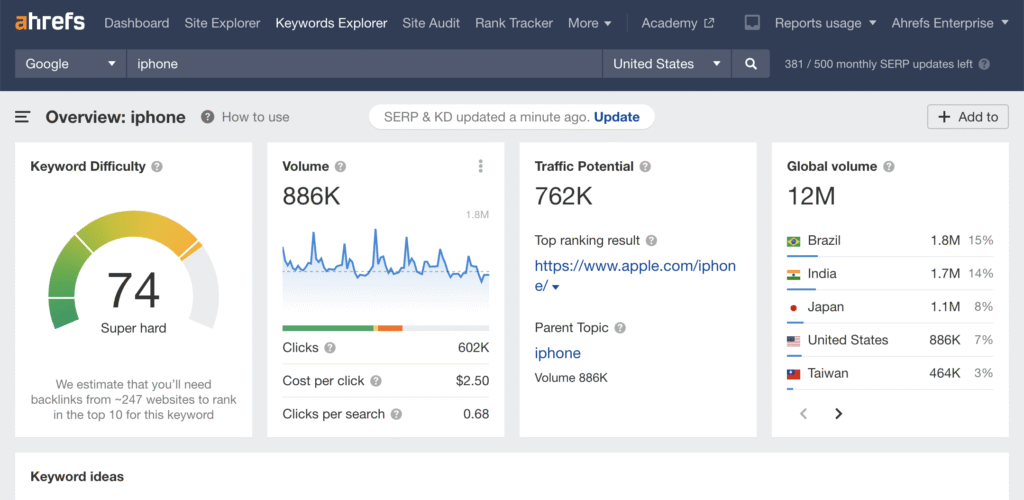
Ahrefs Keywords Explorer is useful when you want to understand the value behind a topic, not just one keyword. Its Traffic Potential metric estimates the organic traffic received by the top-ranking page across all keywords that page ranks for.
That matters for ecommerce because one category page may rank for hundreds of closely related terms.
For example, a “men’s waterproof hiking boots” category may also rank for size, material, weather, brand, and use-case modifiers. Ahrefs helps you evaluate the page-level opportunity instead of treating every phrase as a separate target.
Where Semrush Is Stronger
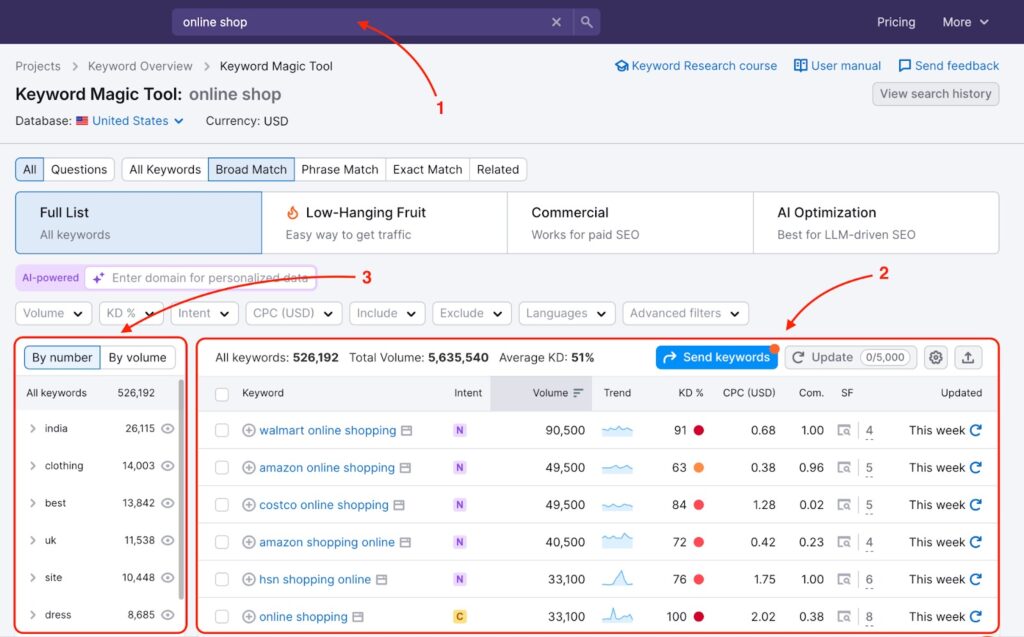
Semrush is stronger when the team needs a structured content map. Keyword Strategy Builder can organize up to 10,000 keywords into topics, pillar pages, and subpages, then connect those groups with content and tracking workflows.
For ecommerce, this can help separate:
- Main category pages
- Subcategory pages
- Buying guides
- Comparison content
- Brand pages
- Use-case content
- Informational support pages
| Keyword planning task | Ahrefs | Semrush |
|---|---|---|
| Find long-tail opportunities | Excellent | Excellent |
| Estimate page-level traffic opportunity | Strong | Good |
| Build topic clusters | Strong | Excellent |
| Map pillar and supporting pages | Good | Excellent |
| Analyze competitor keyword gaps | Excellent | Excellent |
| Move research into ongoing campaigns | Good | Excellent |
Semrush Keyword Gap compares keyword profiles across up to five competitors. Ahrefs Content Gap identifies keywords competitors rank for while your site does not. Both are valuable for finding missing ecommerce demand.
The practical mistake is creating a new page for every keyword. First decide whether the query deserves a category, filtered landing page, product page, or supporting article.
Which Tool Is Better for AI Overview and Query Fan-Out Planning?
Google documents that AI Overviews and AI Mode can use query fan-out, issuing multiple related searches across subtopics and data sources.
For ecommerce content, this means one broad query can expand into questions about product type, use case, features, price, brand, comparison, compatibility, delivery, or alternatives.
Semrush Ai Visibility
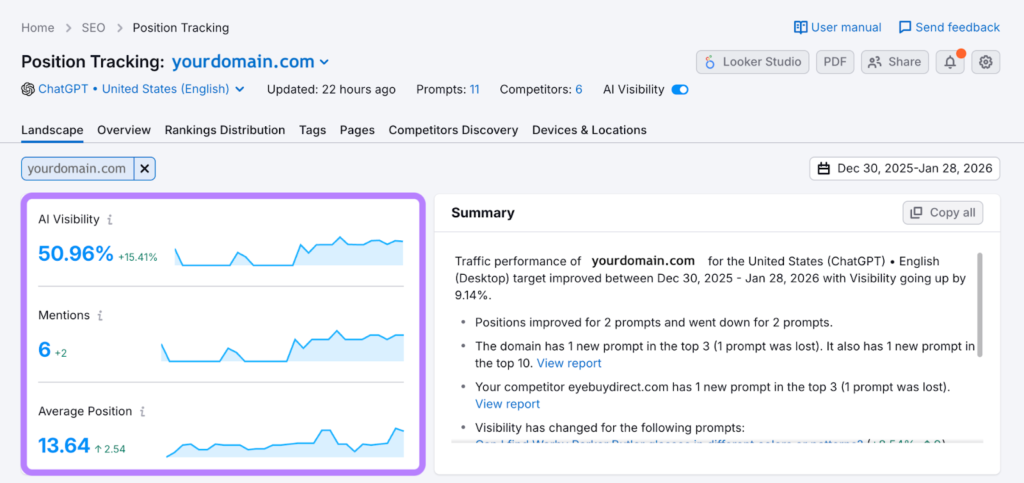
Semrush has an advantage for organizing those related subtopics into a structured content plan.
Ahrefs Ai Visibility
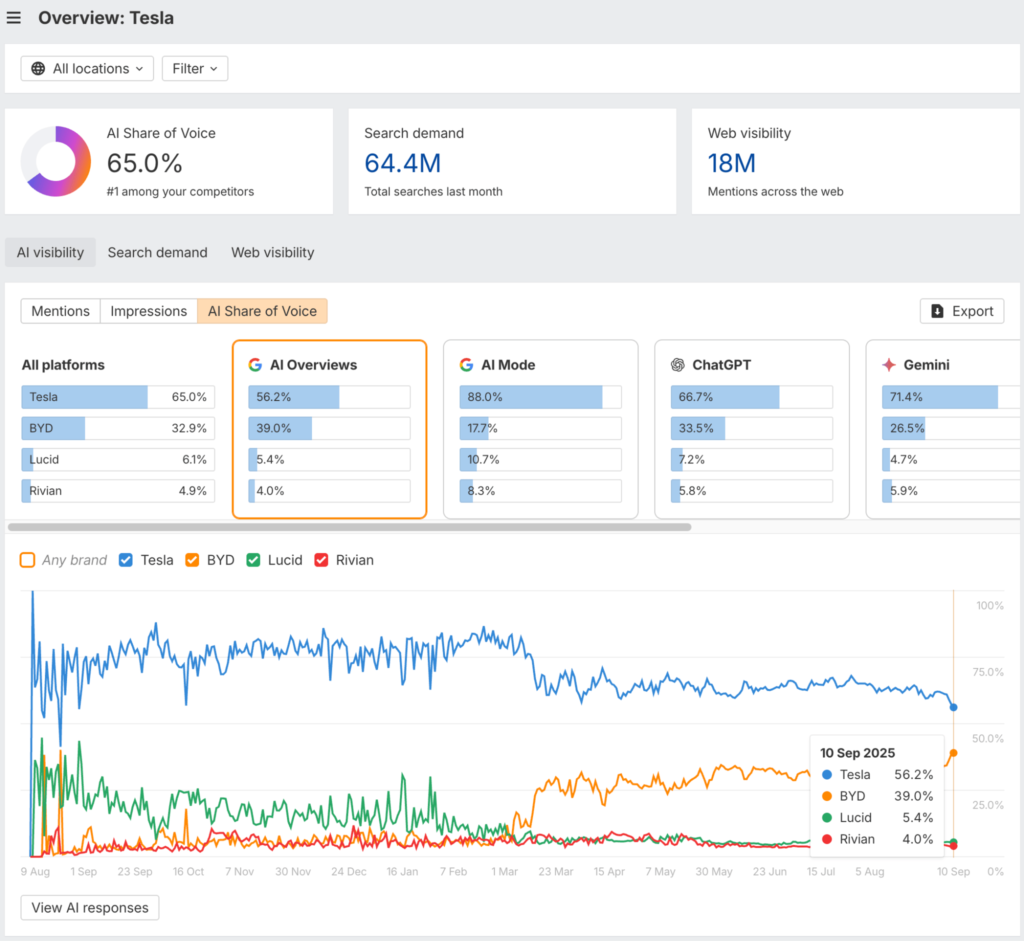
Ahrefs has an advantage when you want to inspect which competitor pages already capture those variations and how much traffic the full topic may produce.
Do not create thin pages just to cover more fan-out queries. Build pages around clear search intent and useful ecommerce decisions.
Ahrefs vs Semrush for Competitor and Backlink Analysis
Competitor research is where Ahrefs often feels more direct. Site Explorer combines organic traffic, keyword, page, backlink, and competitor data in one research environment. Its Content Gap and link research tools make it easy to move from a winning competitor page to the signals supporting it.
Semrush is also strong. Backlink Gap can compare up to five competing sites and show referring domains that link to competitors but not your store.
| Competitor SEO task | Ahrefs | Semrush |
|---|---|---|
| Find top competitor pages | Excellent | Excellent |
| Analyze backlink profiles | Excellent | Excellent |
| Find missing referring domains | Excellent | Excellent |
| Review keyword overlap | Excellent | Excellent |
| Build outreach workflow | Good | Strong |
| Fast exploratory competitor research | Excellent | Strong |
For ecommerce, do not copy a competitor because it has more links. Check which page type earned those links.
A buying guide may attract editorial links, while a category page receives authority through internal links. Understanding that difference helps you build a realistic strategy instead of chasing backlinks to pages publishers rarely cite.
Strong internal linking for ecommerce category pages can also move authority from linkable guides and editorial assets into commercial pages.
Ahrefs vs Semrush for Ecommerce Technical SEO
Both platforms include site crawlers, but neither should be treated as a complete technical ecommerce diagnosis.
Ahrefs Site Audit
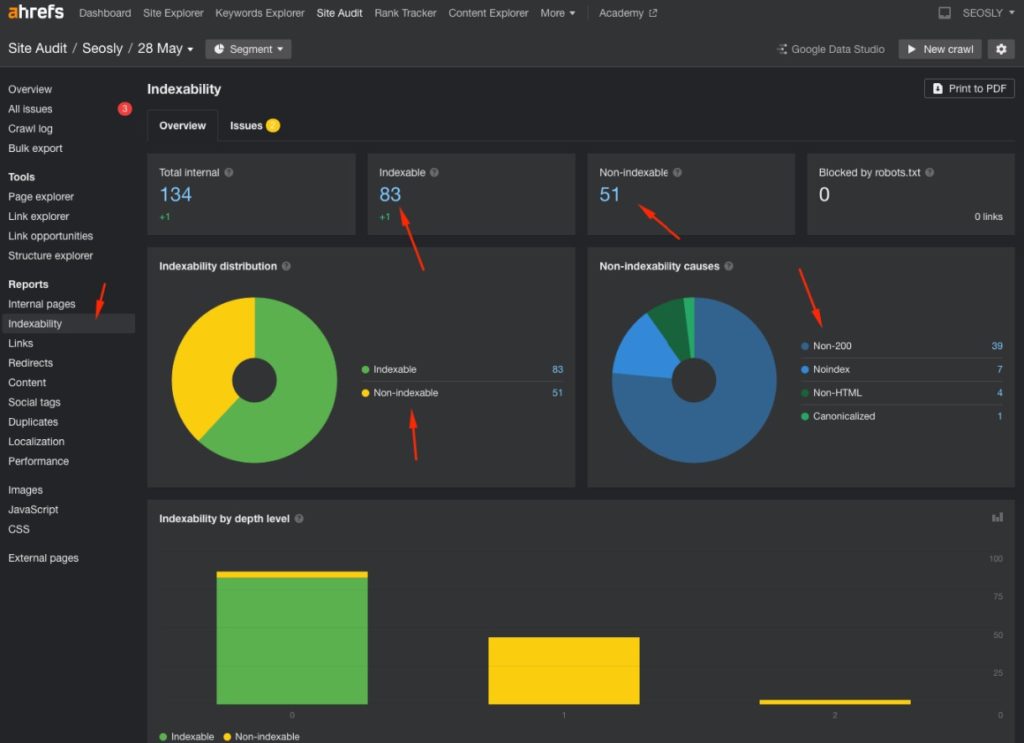
Ahrefs Site Audit currently checks more than 170 technical and on-page issues, including indexability, redirects, JavaScript, robots directives, sitemaps, structured data, Core Web Vitals, and duplicate content. It can also execute JavaScript.
Semrush Site Audit
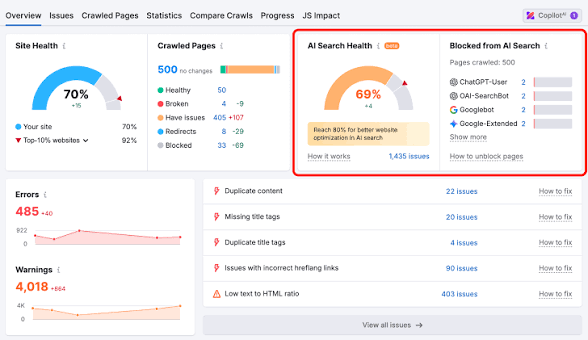
Semrush Site Audit provides crawlability, structured data, technical health, and issue reporting. Its thematic reports include crawlability and markup analysis.
| Technical ecommerce check | Ahrefs | Semrush | Specialist review still needed? |
|---|---|---|---|
| Broken links and redirects | Yes | Yes | Sometimes |
| Indexability signals | Yes | Yes | Yes |
| Robots and sitemap issues | Yes | Yes | Yes |
| Structured data issues | Yes | Yes | Yes |
| Core Web Vitals signals | Yes | Yes | Yes |
| Faceted navigation strategy | Partial | Partial | Yes |
| URL parameter control | Partial | Partial | Yes |
| Crawl-budget prioritization | Partial | Partial | Yes |
Large stores need deeper checks because the crawler can find a URL problem without understanding the commercial purpose of that URL.
For example, thousands of filter combinations may be technically crawlable but strategically unnecessary. Review ecommerce URL parameter control together with robots.txt for ecommerce SEO before making crawl-blocking changes.
You should also separate crawl access from index eligibility. This guide explains crawlability vs indexation for ecommerce SEO and why solving one does not automatically solve the other.
Three Things Most Ahrefs vs Semrush Comparisons Miss
1. Category Architecture Matters More Than Keyword Volume
A keyword tool can show demand. It cannot decide your store architecture for you.
The important question is whether a search pattern deserves a permanent indexable landing page. That decision should consider demand, assortment depth, intent, internal linking, duplication risk, and conversion value.
2. Do Not Compare Tool Metrics as Exact Truth
Ahrefs and Semrush use different databases, crawlers, models, and estimation methods. Search volume, traffic estimates, authority metrics, and backlink counts can differ.
Use each platform consistently to compare trends and competitors. Do not assume a higher number in one tool proves the other tool is wrong.
3. Technical SEO Needs Business Context
Neither platform knows whether a parameter page should rank, whether an out-of-stock product should remain indexable, or whether a category should be merged.
Those decisions require crawl data, Google Search Console, templates, inventory rules, and business context. A proper ecommerce technical SEO audit connects tool findings to revenue-impacting actions.
When Ahrefs Is Better for Ecommerce SEO
Choose Ahrefs when your main work is research-led SEO.
It is especially useful when you need to:
- Reverse-engineer competitor category and content performance
- Find link gaps and linkable content patterns
- Evaluate the broader traffic potential of a topic
- Discover organic opportunities quickly
- Investigate ranking pages before creating new ecommerce content
Ahrefs is a strong fit for SEO specialists, lean in-house teams, and agencies that spend significant time on competitor research and backlinks.
Its current main paid plans start with Lite at $129 per month, while a limited Starter option is available at $29 per month. Plan limits differ for projects, crawl credits, tracked keywords, history, and users.
When Semrush Is Better for Ecommerce SEO
Choose Semrush when SEO sits inside a larger marketing and reporting workflow.
It is especially useful when you need to:
- Organize large keyword sets into topic clusters
- Track rankings daily across many target terms
- Coordinate competitor, content, backlink, and reporting work
- Manage multiple stores, markets, or client campaigns
- Connect research more directly with optimization workflows
Semrush’s current SEO plan lists five monitored websites, 500 daily tracked keywords, Position Tracking, Site Audit, basic keyword research, competitor analysis, and AI search monitoring. Higher tiers expand historical data, sites, keywords, content optimization, and reporting capabilities.
For Shopify stores, platform choice should still follow the problem. A Shopify technical SEO expert may use either platform, but theme architecture, collections, product variants, canonicals, internal links, and app-generated URLs still require platform-specific analysis.
Which Tool Should an Ecommerce Team Choose?
If you can only choose one tool, match it to the work your team performs every week.
Choose Ahrefs if backlink analysis, competitor intelligence, content gaps, and organic opportunity research are your main priorities.
Choose Semrush if keyword organization, rank tracking, campaign management, reporting, and broader marketing workflows are more important.
For a mature ecommerce SEO program, the better answer may be neither tool alone. Ahrefs or Semrush can guide prioritization, while Google Search Console and a dedicated crawler validate what search engines can actually access and process.
Before acting on large audit exports, review Core Web Vitals for ecommerce and your broader technical SEO audit process. Fixing high-impact template problems usually creates more value than clearing hundreds of low-priority warnings.
Run an Ahrefs or Semrush Technical SEO Audit Before Scaling Content or Backlinks
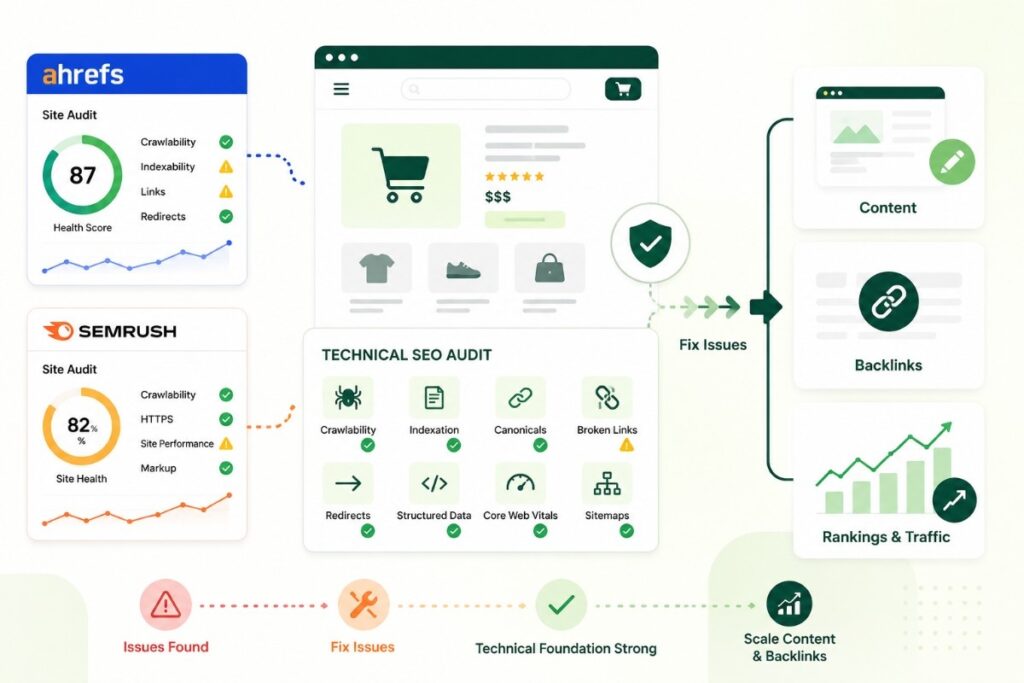
Before scaling category content, buying guides, or link building, first validate your ecommerce SEO foundation using Ahrefs Site Audit or Semrush Site Audit. This step ensures you are not building growth on top of hidden technical issues that limit visibility in search.
Both tools help detect critical problems that directly impact rankings and crawl efficiency, including crawl errors, broken internal links, noindex or accidental indexation issues, canonical conflicts on product and category pages, redirect chains, duplicate content from filters or variants, weak internal linking, and sitemap or index coverage gaps.
Ahrefs is often preferred for faster issue discovery and deeper site health insights, while Semrush is stronger for structured reporting and ongoing SEO tracking. For teams scaling ecommerce SEO, running a structured ecommerce technical SEO audit ensures you are not scaling content on a weak technical base, since many ecommerce sites lose rankings due to crawl and indexation problems rather than content quality.