We review crawl paths, indexation signals, internal links, sitemaps, robots rules, canonicals, and low-value URLs to help search engines discover, crawl, and prioritize your most important pages.
If search engines cannot efficiently crawl your website, important pages may be missed, delayed, or ignored. For ecommerce and large websites, crawl budget can be wasted on low-value URLs instead of revenue-driving pages.
Important Pages May Not Index
Product, category, service, or blog pages may be discovered but not indexed if Google receives weak or conflicting signals.
Crawl Budget Can Be Wasted
Search engines may spend time crawling duplicate URLs, filtered pages, parameter URLs, redirects, or low-value pages.
Sitemaps May Send Weak Signals
XML sitemaps with redirected, blocked, canonicalized, or non-indexable URLs can confuse search engines.
Duplicate URLs Create Confusion
Faceted navigation, variants, sorting parameters, and tracking URLs can create many versions of similar pages.
Important Pages May Not Index
Important pages buried too deep in the site structure may be crawled less often or treated as lower priority.
Important Pages May Not Index
Robots.txt, noindex tags, x-robots headers, and canonicals must work together correctly.
See how the technical SEO audit is structured before requesting your analysis. These demo report previews show the type of findings, priorities, and recommendations included.
Identify unnecessary URLs that consume crawl activity, such as filters, parameters, duplicate pages, internal search URLs, and outdated redirects.
Strengthen internal links so important category, product, service, and content pages are easier for search engines to discover.
Ensure XML sitemaps include useful, indexable, canonical URLs that deserve search engine attention.
Use robots.txt, noindex, canonical tags, parameter handling, or internal linking changes where appropriate.
Reduce unnecessary redirect chains, 404s, soft 404s, and server errors that waste crawler resources.
Help crawlers focus more on pages that support rankings, organic traffic, and conversions.
There are clear signs that your ecommerce website may have technical SEO problems. When these appear, content updates or link building alone usually will not fix the issue.
You publish new pages, but they stay in “Discovered - currently not indexed” or “Crawled - currently not indexed.”
Site migrations and redesigns can change URLs, templates, internal links, and SEO signals. If redirects, canonicals, or sitemaps are not handled correctly, rankings can drop.
Google selects a different canonical than the one you intended, causing the wrong URL to appear in search.
Key product, category, service, or content pages do not appear in search results.
Submitted sitemap URLs are crawled slowly, ignored, or excluded from the index.
Ecommerce, directory, marketplace, or large content sites may have crawl traps that reduce crawl efficiency.
See how the technical SEO audit is structured before requesting your analysis. These demo report previews show the type of findings, priorities, and recommendations included.
Google Search Console data
XML sitemap quality
Robots.txt rules
Meta robots tags
Duplicate URL patterns
404 and soft 404 issues
Crawl budget waste
Log file signals
Orphan page signals
Screaming Frog crawl data
Screaming Frog crawl data
There are clear signs that your ecommerce website may have technical SEO problems. When these appear, content updates or link building alone usually will not fix the issue.
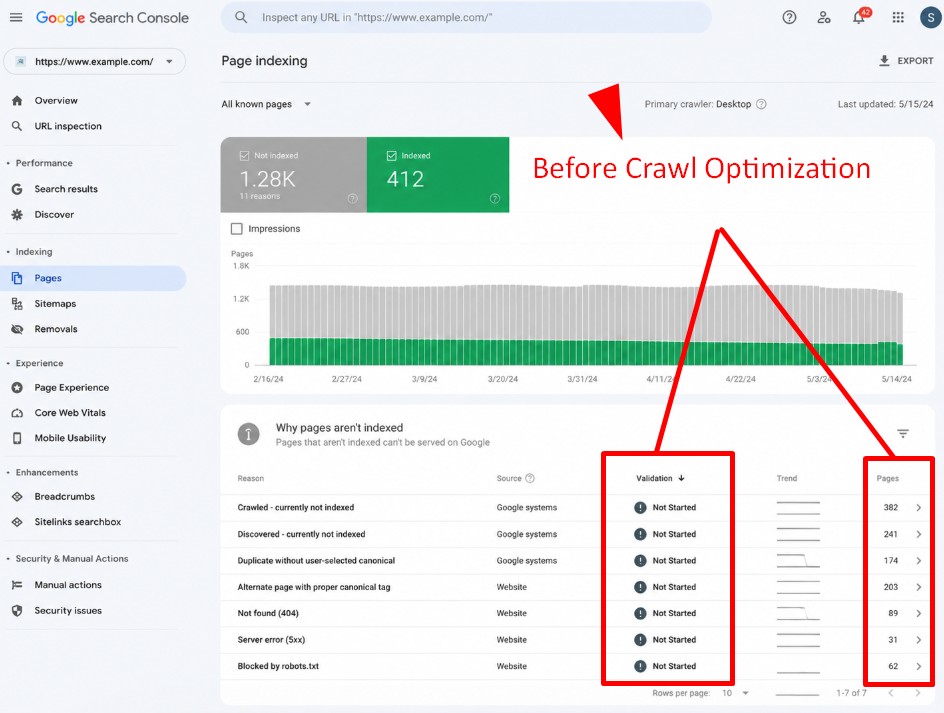
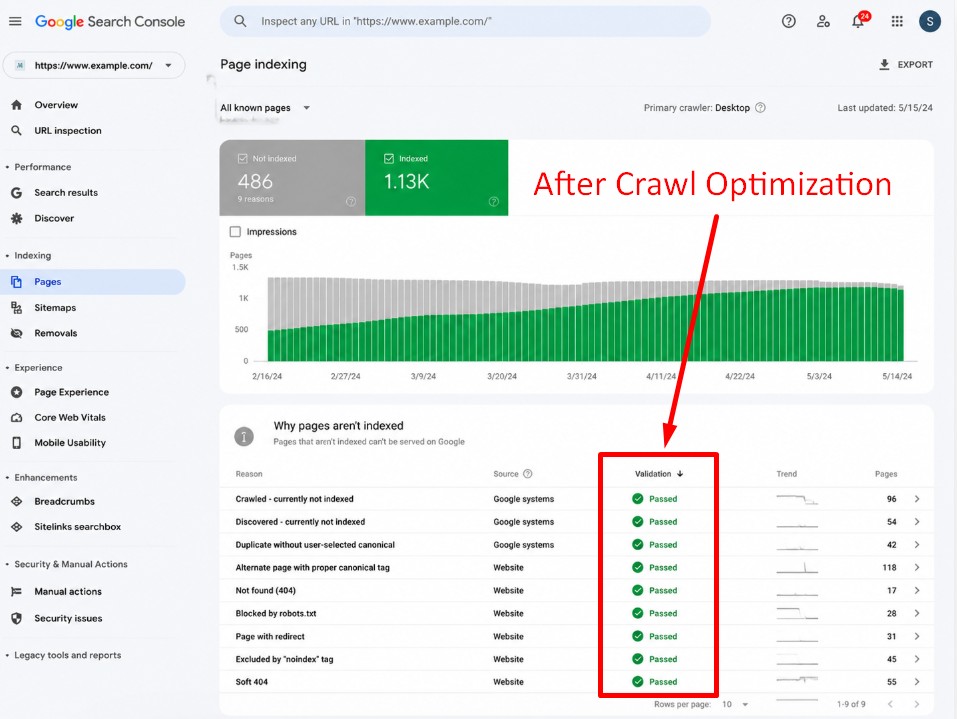
See how the technical SEO audit is structured before requesting your analysis. These demo report previews show the type of findings, priorities, and recommendations included.
We review Google Search Console, sitemaps, crawl data, indexability signals, and important URL groups.
We identify duplicate URLs, filters, parameters, redirects, blocked paths, and low-value pages.
We create a priority-based plan for sitemaps, robots rules, canonicals, internal links, and noindex strategy.
Fixes are implemented or documented, then monitored through GSC, crawl reports, and indexation trends.
See how the technical SEO audit is structured before requesting your analysis. These demo report previews show the type of findings, priorities, and recommendations included.
Better Crawl Efficiency
Search engines can spend less time on low-value URLs and more time on important pages.
Cleaner Indexation Signals
Sitemaps, canonicals, robots rules, and internal links can send more consistent signals.
Improved Page Discovery
Key product, category, service, and content pages can become easier to find and crawl.
Faceted navigation, sorting, tracking, and parameter URLs can be controlled more effectively.
A cleaner crawl structure helps support rankings, scalability, and future SEO work.
You get a practical roadmap showing what to fix first and what does not need urgent action.
Google decides which URLs to crawl and index. We cannot force every page into the index, but we can improve the signals that influence crawling and indexation. This includes improving internal links, cleaning sitemaps, reducing duplicate URLs, fixing technical conflicts, strengthening canonical signals, and helping crawlers focus on important pages.
Indexation & Crawl Optimization Questions Architecture & Internal Linking Questions
Crawl budget optimization means helping search engines spend more crawl activity on important URLs and less on duplicate, low-value, redirected, blocked, or unnecessary URLs.
Pricing depends on your site size, complexity, and issues. After reviewing your site, we provide a custom quote based on required work.
This can happen because of crawl demand, duplicate content, weak internal linking, low content value, canonical issues, technical conflicts, or Google deciding the page is not currently worth indexing.
Yes. Ecommerce sites often create filtered, sorted, parameter, variant, and duplicate URLs that can waste crawler attention.
Yes. XML sitemap quality is one of the key areas reviewed during crawl and indexation optimization.
Yes. The service can include findings, fix priorities, affected URL examples, and recommended next steps.